
Where CCDC Releases Lead
A Campbell County Detention Center release can lead to several places. A local detainee may leave for the community after bond, time served, probation, sentence completion, dismissal, or another court order. A person serving state time may move to a Kentucky Department of Corrections institution or remain a state prisoner housed in a county jail. A federal or immigration detainee may leave CCDC custody but enter USMS, BOP, or ICE custody. The word “released” therefore describes the end of one custody episode, not always freedom from all custody.
The strongest proof joins the CCDC release screen or log with the source that authorized or continued the move. A Campbell court order can explain bond, dismissal, sentence, or probation. Kentucky Online Offender Lookup, known as KOOL, shows state correctional status. BOP and ICE sources cover their own systems. The broader Campbell County released-inmate search helps route a named-person check when the receiving authority is unclear.
Confirm a CCDC Release
Start with the custody class, not a broad name search. The official Campbell JailTracker is labeled for current inmates. It is not a historical release archive. Kentucky VINE can report a release date when the person is no longer held by a participating agency, but the date should be checked against the jail record and the authority responsible for the next step.
- Search the current roster to learn whether CCDC still reports custody.
- Check Kentucky VINELink by exact name or identification number and compare the reporting facility.
- For state offenders, open KOOL and review current location, status, supervision, and release fields.
- Ask the Campbell court clerk for the docket and signed order that explains the judicial event.
- Request the CCDC release screen, disposition, destination, and supporting transfer or discharge record.
A court order may authorize release before jail processing is complete. Conversely, a CCDC departure may occur while a sentence continues elsewhere. Record the effective date and source of each fact. That prevents a current roster, a court action, and an actual departure time from being treated as the same event.
CCDC Release Records Contact
For a past Campbell County Detention Center release, the local open-records route is the most direct county source. Requests should identify one person and a bounded booking episode. Ask for existing records rather than a new explanation. Useful terms include booking or jacket number, actual release date and time, disposition, release reason, destination, receiving authority, and any existing release, transfer, transport, or discharge order.
Campbell County Detention Centerc/o Open Record Requests
601 Central Avenue
Newport, KY 41071
Phone: 859-431-4611
Email: openrecordsCCDC@campbellcountyky.gov
Fax: 859-431-5147
The CCDC open-records instructions require a signed request with the requester’s printed name, delivery address or email, commercial-purpose response, precise description, and the applicable Kentucky-resident statement. The official form lists hand delivery Monday through Friday from 8:30 a.m. to 4 p.m. CCDC says it determines compliance within five days, excluding weekends and legal holidays. No verified local copying fee schedule was found, so request an estimate before processing.
CCDC Custody Classes Explained
CCDC serves county agencies and houses county, state, and federal prisoners. That mixed population makes the legal custodian more important than the building alone. The jail can document when physical custody at 601 Central Avenue ended. It may not be the final source for a state sentence, federal confinement, immigration detention, or the court case.
| Custody class | Best next record | What it establishes |
|---|---|---|
| Local detainee | CCDC release record and Campbell court order | Departure, reason, and judicial authority |
| Kentucky DOC offender | KOOL and DOC record | State location, status, supervision, or discharge |
| Federal detainee | BOP locator and federal court record | BOP status, release date, and federal case action |
| Immigration detainee | ICE locator and CCDC destination | Recent ICE custody or transfer path |
A detainer is a request by another authority for notice and possible continued holding. It can turn a local release into an agency transfer. If the destination field names another jail or authority, contact that custodian instead of assuming the person went home.
Federal Detainees Missing From CCDC
Campbell County has a distinctive federal-record problem. Official Fiscal Court minutes state that federal detainees are omitted from the public jail tracker. They also describe the county’s long USMS agreement and an amendment for ICE housing. Campbell County is not participating in the federal 287(g) program. ICE serves its own warrants, while CCDC says it does not decide whom federal or immigration authorities incarcerate or release.
For a sentenced federal person, use the BOP Inmate Locator. A “RELEASED” result or past release date means only that BOP custody ended. Supervised release or another agency’s custody may continue. For immigration detention, the ICE locator covers current detainees and some people released from ICE custody within the prior 60 days. CCDC lists 513-684-1594 for local USMS inquiries and 872-351-3990 for immigration-detainee inquiries.
The ICE detainer source explains why departure from local custody can lead to federal custody.
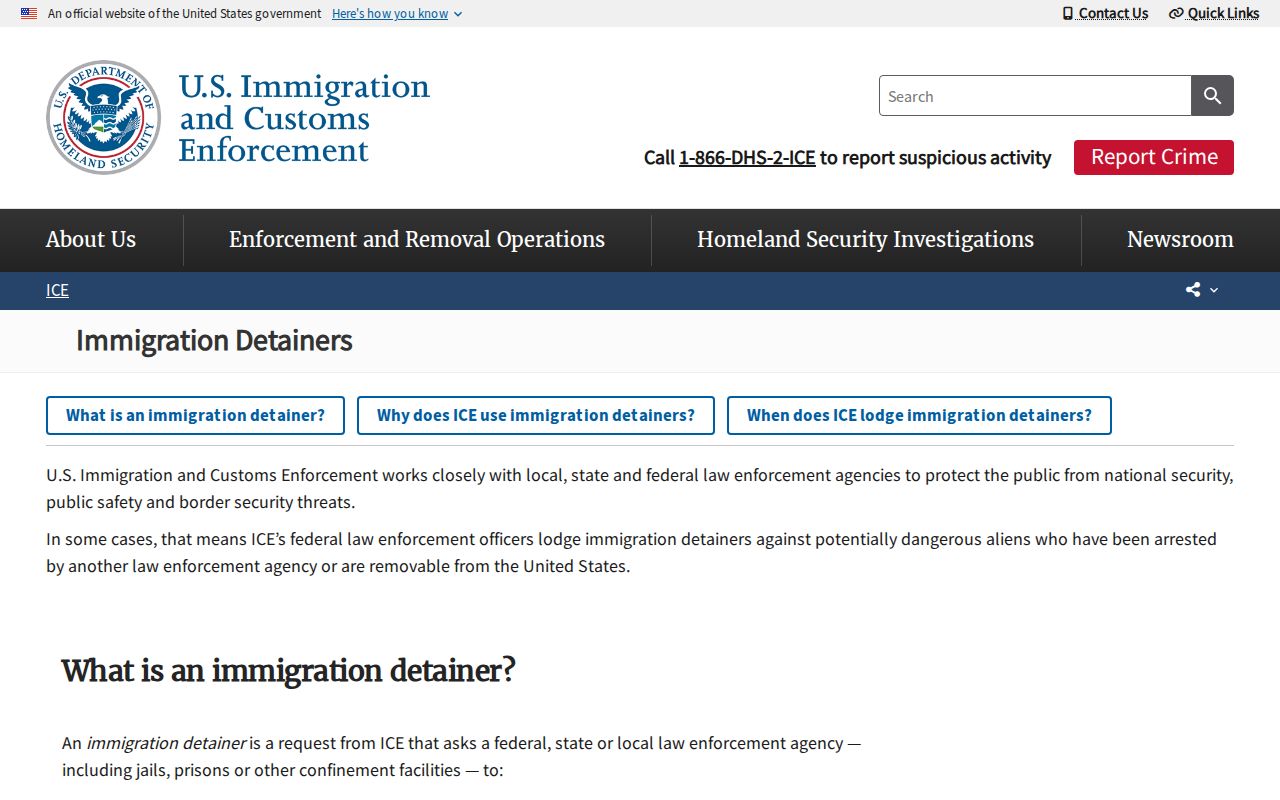
The captured source supports the transfer distinction that the public CCDC roster cannot resolve by itself.
CCDC History and Release Context
The official CCDC history traces Campbell County jails to a round-log structure built in 1796, followed by buildings in 1799 and 1817. More recent material describes a 2016 expansion costing $7.53 million, with a 107-bed wing, 36 isolation beds, former District Court space, a stated capacity of 689, and at least 30 program beds. Those are historical project figures, not a claim about current rated capacity or staffing.
That history matters because today’s facility is not merely a local lockup. It is a multi-authority detention site with restricted custody, work-release programming, state prisoners, and federal arrangements. The official history page provides a visual record of that institutional role.
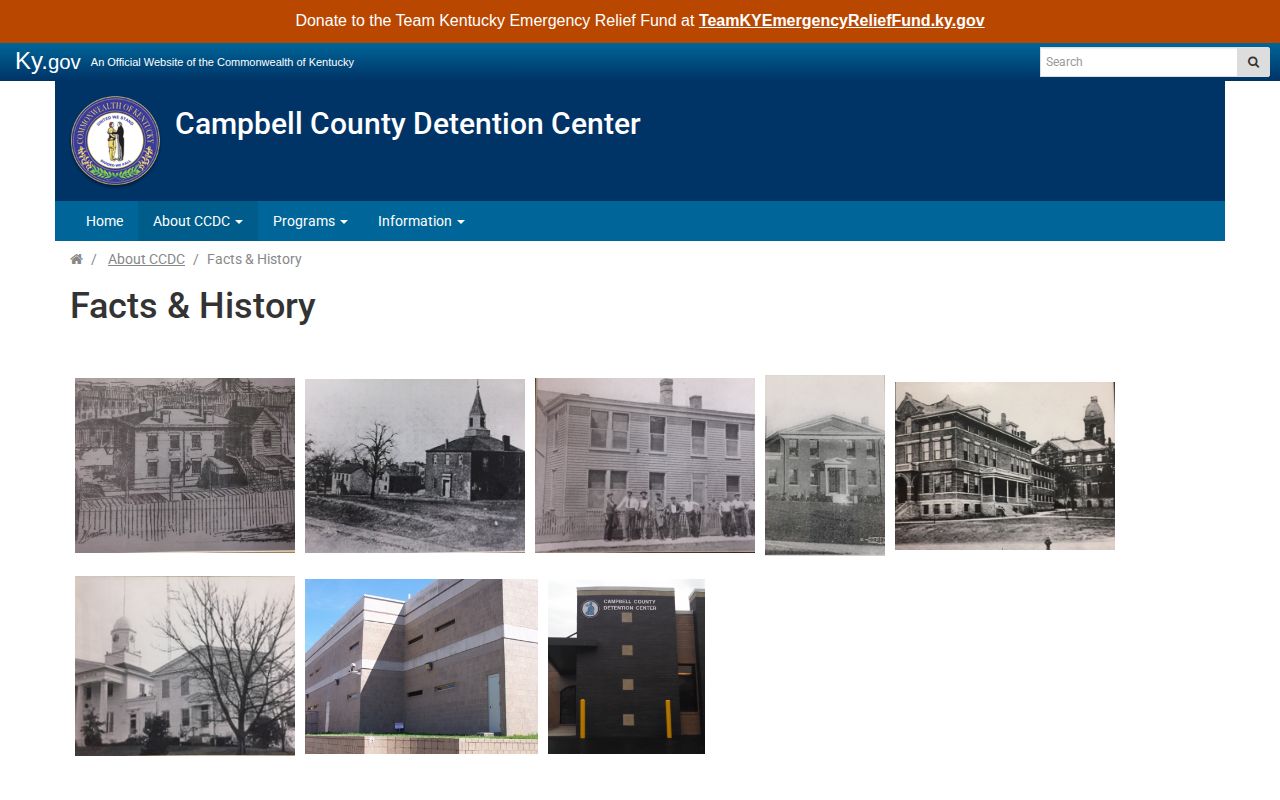
The image gives context for why a CCDC release must be matched to the correct legal custody system.
Note: Historical bed and project figures should not be read as a current population count or present-day release schedule.
Campbell Court Release Evidence
The jail record proves physical movement. The court file explains the judicial action. Campbell County’s clerk at 330 York Street can provide the docket and signed bond, dismissal, judgment, sentence, probation, or revocation order. The office phone is 859-292-6314, with option 1 for District Court and option 2 for Circuit Court. Hours are Monday through Friday, 8:30 a.m. to 4 p.m.
District Court generally handles misdemeanors, violations, preliminary felony steps, and many first bond matters. Circuit Court handles indicted felony cases and final felony judgments. A charge label is not a disposition. A bond order also does not prove the jail completed release at the same time. Pair the signed order with the CCDC departure record. Sealed, expunged, juvenile, or confidential material may not be publicly visible, so a no-result response does not prove there was no earlier Campbell County custody episode.
Public Record Search
Sponsored Results