
Campbell Projected Versus Actual Release
A projected release date is an estimate based on the sentence and the credits, restrictions, and status then recorded. Kentucky Online Offender Lookup uses the exact label “Projected Release Date” for a state offender. It must not be rewritten as “released on.” The actual date is fixed only after custody ends and the releasing agency records the event. Court action, credits, parole, or another hold may intervene first.
The date should also be matched to the right sentence and custody episode. A person may have concurrent or consecutive terms, a later revocation, or a separate hold that does not appear in the same summary field. Record the DOC or PID number, current location, sentence details, and the date the result was viewed. Those details make it possible to compare a saved projection with a later KOOL, court, or release record without treating an ordinary update as an error.
A pretrial detainee has no sentence-based end date. Release depends on bond, dismissal, a later sentence, or another court order. Even a bond order authorizes release without proving CCDC completed processing. A sentenced county inmate may have a computable term, but the jail record and court orders remain the local sources.
Find Campbell Projected Release Dates
First identify the custody system. A Kentucky DOC offender is searched in KOOL. A county-only CCDC sentence requires the detention center record and Campbell court file. Federal sentences use the BOP locator and federal court judgment. These paths cannot be combined into one universal date.
- Confirm the person's full name and identifying number when known.
- Search KOOL for a Kentucky DOC offender and open the detailed record.
- Read “Projected Release Date,” sentence details, location, and supervision fields together.
- For CCDC custody, ask for the booking, sentence-credit calculation, release screen, and controlling order.
- Obtain the Campbell clerk's judgment and later amendment, revocation, or credit orders.
- After the event, compare the estimate with VINE and the actual release or discharge record.
The full Campbell County release-record path explains how to request the county record. Ask for an existing calculation or record, not a new legal opinion.
Kentucky Credits Shape Campbell Dates
Kentucky sentence credits do not apply as one flat discount. KRS 197.045 governs sentence credits for qualifying state prisoners. Credits may reflect good conduct, program completion, or other categories authorized by law and DOC rules. Eligibility depends on the conviction, sentence, classification, and conduct. Lost credit can move a projection later, while newly posted qualifying credit can move it earlier.
Some people confined at a county jail are state felons. 501 KAR 2:060 addresses sentence credits for qualifying state felons housed in county jails. That is different from assuming every CCDC detainee earns the same credit. Pretrial custody, a county sentence, and a state sentence have different legal bases and records.
For an applicable violent offender, KRS 439.3401 can require service of 85 percent before release eligibility. The rule is offense-specific. It should never be applied to every felony or used as a shortcut for computing a date.
Why Campbell Release Dates Change
A projection is recalculated when its inputs change. Some changes alter the sentence computation. Others keep a person in custody after one authority is ready to release. Read the newest agency record rather than relying on a saved search result.
| Factor | Possible effect |
|---|---|
| Credit earned or posted | May move an eligible projected date earlier. |
| Disciplinary credit loss | May move the estimate later. |
| Court amendment or revocation | Can change the controlling sentence or custody order. |
| Parole decision | Eligibility or a hearing is not release; a grant remains conditional until processed. |
| Detainer or warrant | May transfer custody to another agency instead of producing community release. |
| Data correction | Can change a displayed date without a new court event. |
A detainer is another agency's request concerning custody or notice. It can change the destination without extending the original sentence itself. Campbell County's federal and ICE population makes transfer checks especially important.
Confirm Campbell County Release Dates
Use Kentucky VINELink release alerts for notice of a custody change, then confirm it with the source agency. VINE can show a release date when a reporting facility no longer lists custody, but it does not always explain the destination or legal cause. For a CCDC departure, request the actual date and time, disposition, destination, and supporting order.
For a state prisoner, compare KOOL with the DOC release or discharge record. Community supervision is not final discharge. A person can leave prison on parole or mandatory reentry supervision and remain under Kentucky DOC authority. For federal custody, BOP warns that a released result may coexist with supervised release or custody elsewhere.
Campbell County Date Source Split
CCDC houses county, state, and federal prisoners, so the building alone does not tell which rule controls. A current local roster is custody evidence, not a sentence calculator. For a state felon temporarily housed there, KOOL and DOC computation records may govern. For a person awaiting trial, the Campbell court order governs the release authority. For a federal detainee, the federal judgment and BOP systems control.
- Projected release
- A current estimate based on recorded sentence data.
- Parole eligibility
- The point when review may occur, not a promise of release.
- Discharge
- The end of the relevant custody or supervision term.
- Detainer
- A request from another authority that may affect custody or destination.
Ask CCDC at 601 Central Avenue, Newport, KY 41071, or 859-431-4611 for the county record. The Campbell clerk's signed judgment shows the judicial term, while the agency calculation applies custody and credit data. Keeping those roles separate prevents a court date, eligibility date, and physical release date from being treated as the same event.
Official Campbell Release Calculations
The Kentucky county-jail credit regulation is the official source illustrated below. The 501 KAR 2:060 regulation page should be read with the person's sentence and classification.
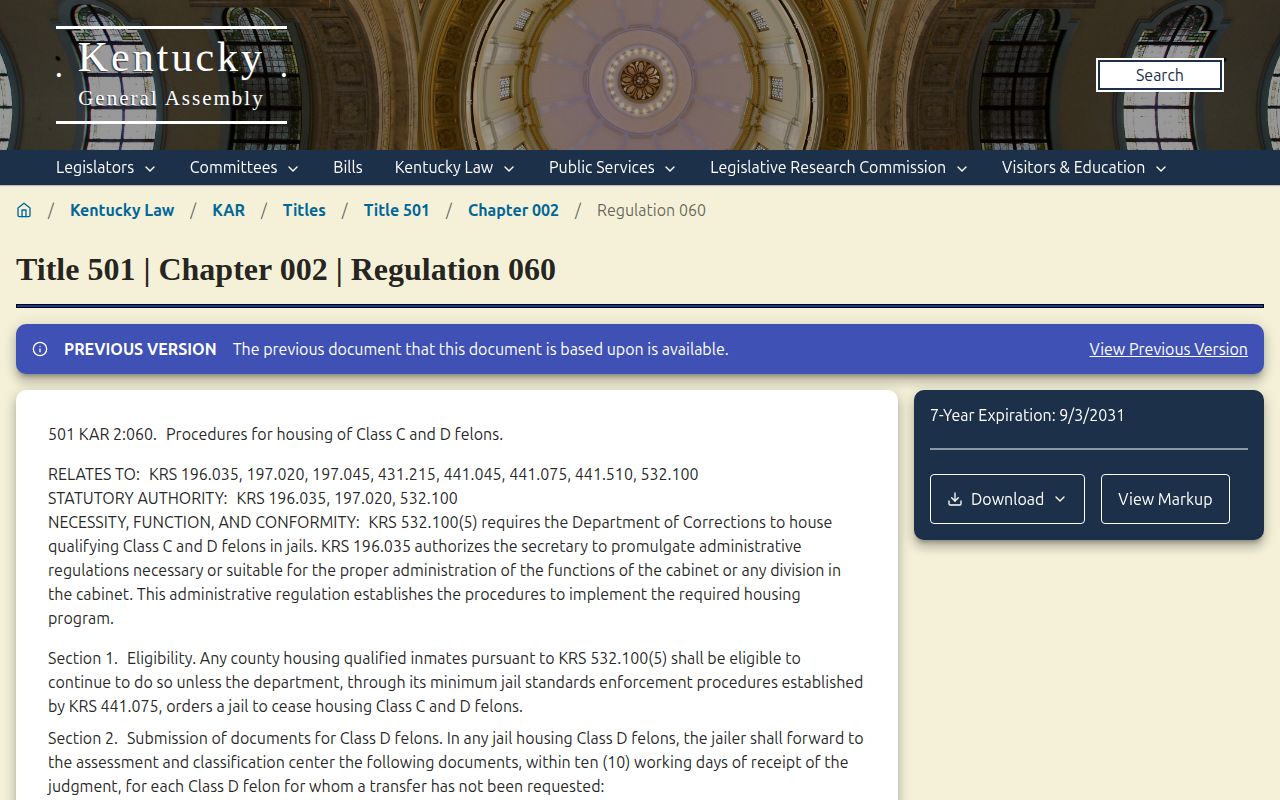
The regulation supports a focused county-jail inquiry but does not produce a date by itself. The offender's official computation remains controlling.
Federal sentence computation follows a separate framework. The BOP sentence computation explanation is shown below.
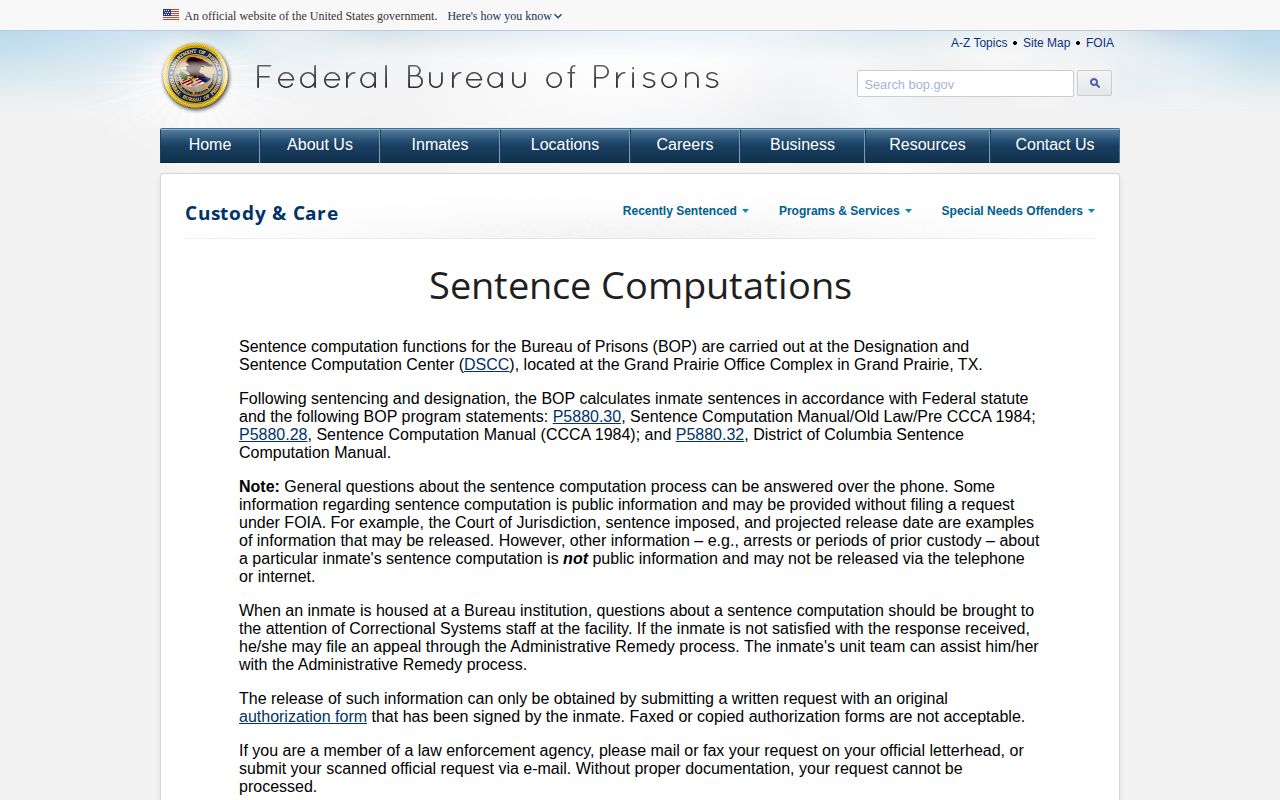
This federal source is relevant when a Campbell detainee enters BOP custody after sentencing. It should not be applied to a county or Kentucky DOC sentence.
Parole adds a date often confused with discharge. Eligibility means review may occur. A hearing schedule does not show that parole was granted, and a grant remains conditional until DOC records release. Supervision can then continue until a final discharge ends it.
Mandatory reentry supervision is a community phase under DOC authority, not the end of the sentence. KOOL supervision fields and District 7 records help distinguish it from incarceration. Campbell court orders control when probation, shock probation, or revocation applies instead.
A warrant or detainer can redirect a person as one custody term ends. Departure from CCDC may become transfer to Kentucky DOC, USMS, or ICE. Ask for the destination and receiving authority in the release record. Without it, one agency's end date does not prove all custody ended.
Historical questions require the record effective on the date in dispute. A current KOOL view may reflect later credits, revocation, or discharge. Request the underlying computation and orders when a saved projection conflicts with the present result.
Campbell Court Release Date Evidence
The Campbell criminal case file may contain the judgment and sentence, later amendments, probation orders, revocation orders, and bond decisions that shape a projected date. Request the docket plus the signed document, not just a charge label or calendar entry. District Court often handles misdemeanors, preliminary felony matters, and initial bond issues. Circuit Court handles indicted felony cases and final felony judgments.
The Circuit Court Clerk's office is at 330 York Street, Newport, KY 41071, and can be reached at 859-292-6314. Press 1 for District Court and 2 for Circuit Court. Office hours in the research are Monday through Friday, 8:30 a.m. to 4 p.m. The clerk is the dependable route for the local file; AOC is not the custodian of each county trial record.
A nominal sentence end may need to be reconstructed. Start with the judgment, then add later credit, amendment, and revocation orders. Compare that legal history with the CCDC or DOC computation. A dismissal can coexist with another hold, and an order authorizing release does not prove the jail completed release processing at the same moment.
Campbell Release Dates by Custody
County custody begins with CCDC records. Ask whether the person was pretrial, serving a county sentence, or housed locally as a state felon. The answer changes whether bond and court orders, local sentence credits, or Kentucky DOC computation controls. A current-inmate roster cannot resolve an old projected date after the person disappears from view.
State custody begins with KOOL and Kentucky DOC. Read the projected field beside sentence, location, and supervision information. If the person is shown in the community, verify whether parole or mandatory reentry supervision remains active. Parole is conditional release after Board action. Probation is a court-ordered community sentence or condition. Neither term means final discharge by itself.
Federal custody begins with the BOP Inmate Locator and the federal judgment. A future BOP date is projected and can change. “UNKNOWN” means the confinement term has not been determined in that display. A past release date means BOP custody ended, but supervised release or custody by another agency may continue.
ICE custody uses ODLS and immigration case sources. A transfer from CCDC to ICE can end county custody without community release. An ICE detainer may request notice and an added hold so DHS can assume custody. Because Campbell holds federal and immigration detainees, destination is never a minor field.